We hope this finds you well and that you’ve enjoyed some moments of sweetness and warmth over the winter break.
For a while now, we’ve wanted to reach out to our listserv about what’s going on in Israel and Palestine. While REAL doesn’t typically focus on international issues, we know that many in our community are deeply affected by this one. We’re aware, for example, that there was a walkout at NHS before the break. We’re also aware that at least one local synagogue has received bomb threats. We know that even among our middle schoolers and high schoolers, the rhetoric around this issue can be extremely polarized and intense.
Honestly, we have struggled to figure out exactly what to say, wondering what would be supportive, honest, non-harmful, and non-redundant. So instead of trying to come up with the “right” thing to say, we thought we’d lead by asking you all some questions.
How are you doing? What have you and your family been experiencing in our schools and community in relation to the Israel-Palestine war? What actions are you taking, if any?
While we have no antidotes or easy answers, each of us has been working in our own ways to take actions that uphold our own values. For example:
–Some of us have focused on listening to and learning from people who are more directly impacted than we are, including friends who have lost loved ones in the conflict.
–Some of us are actively including our kids in the learning, seeking out resources like those here (and here) to help us, as well as attending a local author event.
–Some of us have engaged with and donated money to organizations that include Standing Together and MECA.
–Some of us have grieved with the Parents Circle – Family Forums, joining online with families who have lost loved ones in the long years of conflict in Israel and Palestine, and who find the strength to work for peace rather than revenge.
–Some of us have been calling our congresspeople regularly in support of such actions as a bilateral ceasefire, return of hostages, and an end to U.S. funding of the war.
We are all trying to educate ourselves about Palestine, Israel, antisemitism, and Islamophobia, and to help our children process and cope with what they see and hear. Many of us have found great wisdom in the words of Tara Brach, and much to consider in Ezra Klein’s related podcast episodes.
If you feel like sharing with our team of coordinators any actions you’ve taken or experiences you’ve had, please feel welcome to, in the spirit of information-sharing and connection. To do so, email us at northampton.real@gmail.com. Note: Please don’t email the entire listserv, as an email chain of 200+ people is not a great forum for deep discussion.
We also want to say that we understand the Middle East may not be foremost on your mind at the moment. As always, there are so many other places and issues—in the world, in our communities, and in our own families—that deserve our attention and care. It is all important, and it is all connected.
All our best,
REAL Coordinators*
Jenny Bender, Jen Berneche-Stiles, Kristen Elde, Leigh-Ellen Figueroa, Nicole Mangum, Amy Martyn, Noël Raley, Annie Salsich, Soledad Thorman Vargas, and Lesley Yalen
*Note: REAL’s coordinating team is not a monolithic group or a formal organization, but rather a group of volunteers who meet when we can to talk about and take action on issues of race equity and social justice, largely focused on Northampton public schools. Let us know if you’re interested in being more involved in 2024!
We want to express our appreciation and gratitude to the NPS School Committee for the design and rollout of the search process for a permanent superintendent. While we realize the process was not without hiccups, the committee clearly put a great deal of thought and effort into creating more opportunities for community involvement as well as a rubric that emphasized equity and helped reduce bias.
The School Committee worked closely with the Joy and Justice Team from the Collaborative for Educational Services to reflect on prior hiring processes and map a stronger way forward. This work is incredibly hard, and we thank them for it.
As you may be aware, Dr. Portia Bonner has been chosen to lead the district starting next year. We welcome her and look forward to working with her and, as always, with all of you REAL supporters and NPS community members!
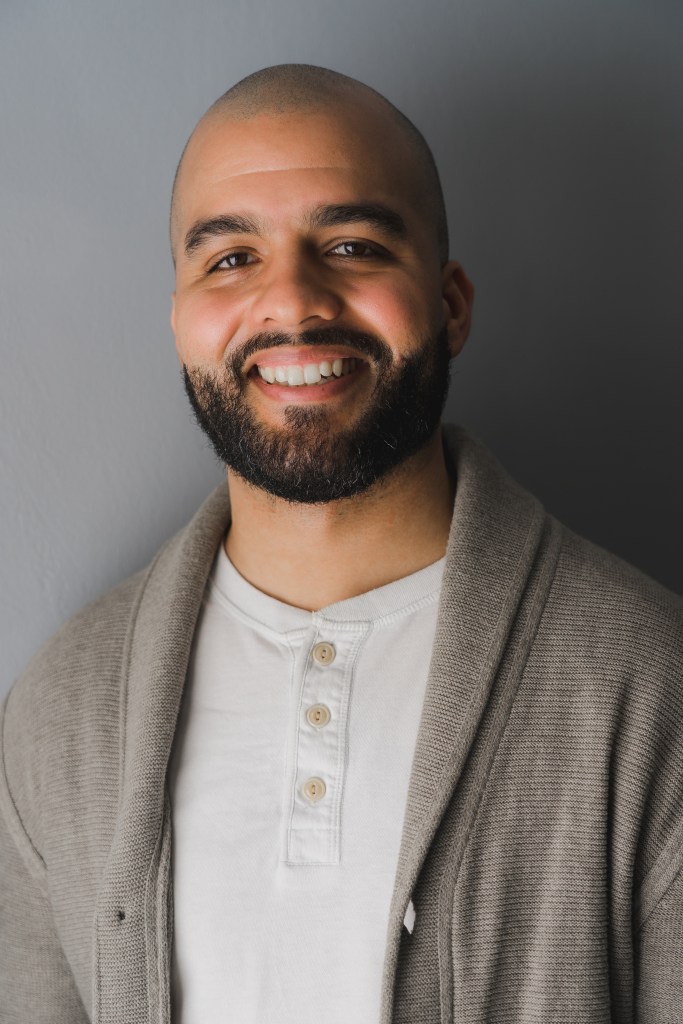
Ed Stone wants every student at Northampton High School to feel that there are adults in the building who they can talk to and trust, who make them feel heard and not judged. He believes that having strong and safe relationships is a key to student success in a world that “doesn’t make a lot of space for us…to safely have feelings and have our needs met around those feelings.”
In his five years as a school adjustment counselor at NHS, Ed has worked with students to help them become more self-aware, to identify their own triggers and needs, to figure out why they make the choices they make, and to understand the effects of their actions on their relationships. Ed started his career working at the Dearborn Academy STEP Program, now located in Newton, MA, a short-term educational placement for students who are struggling to be successful in school due to social, emotional, and mental health challenges. In that job, Ed “learned what targeted instruction and true support can actually do for students,” and he brought this strong belief in student-centered education to his work at NHS.
In his first year in Northampton, Ed was involved with the high school’s student support resource room, which was a space where any student having a hard time could go, check in with staff, and receive both academic and counseling support. Now, he works primarily with special education students and students with behavioral challenges. He teaches them coping and problem-solving skills, and he does a lot of listening. A clinical social worker by training, Ed’s goal is to support students in discovering and being true to themselves, in developing language to “speak to their experience holistically, whether as a special education learner with different learning styles or as a person of color in a majority white dominated space.”
Students of color often gravitate to Ed naturally for support, in part because he is a biracial man and one of only a few educators of color at NHS. For students (and sometimes caregivers) who may feel detached from the school in part because they don’t see themselves represented racially or culturally, his presence can sometimes serve as a bridge. He makes connections with these students and supports them as they navigate the challenges of living in a world where they are often marginalized. For example when a student of color comes to his office and says, “I’m not going to take that class, that class is for white kids,” he helps them work through the idea of internalized oppression. They discuss the origins of this way of thinking, the ways it can dehumanize people of color, and ways the student might disrupt it.
Ed feels lucky to collaborate closely with a small group of colleagues who care about the students he works with and want to ensure that they are not left behind. He feels that many people in the district have good intentions and that we are “facing the right direction” in many ways. And yet, he believes that significant systemic and cultural change is still needed at NHS because outcomes for students of color and special needs students continue to be poor. Those students are the true measure of whether our good intentions have come to fruition, according to Ed. “When their stories start changing,” he says, “that is when we will know we are doing it right.”
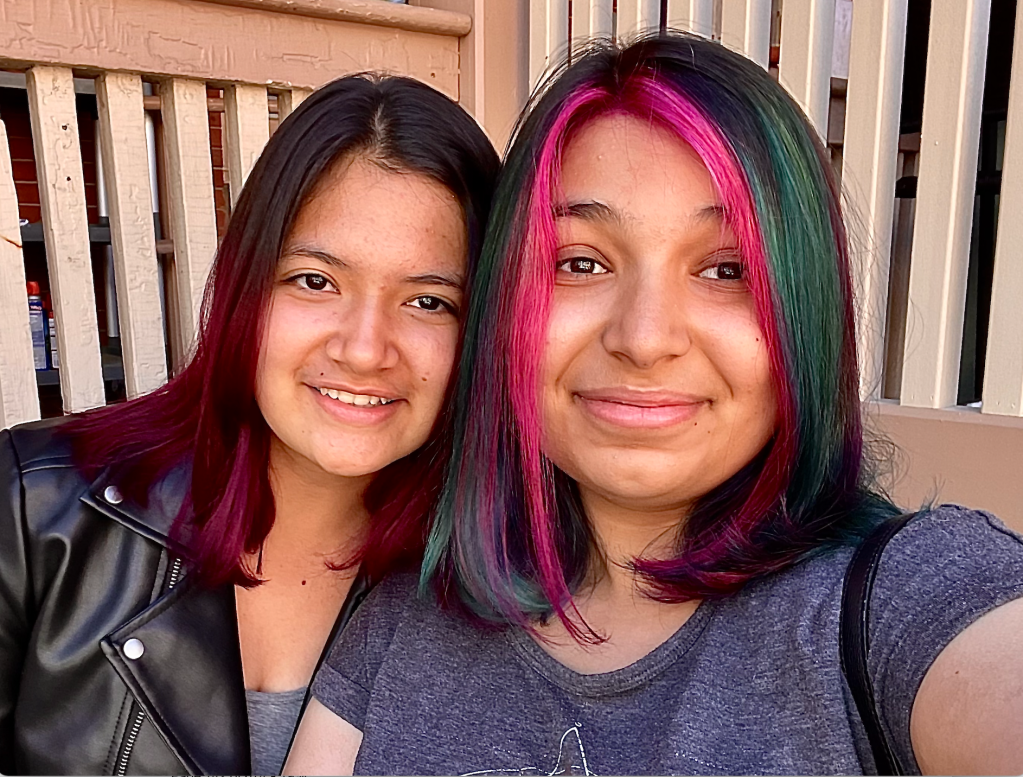
Some of the most inspiring anti-racism work in the Northampton Public Schools is being done by young women of color, students committed to working for change despite the challenges they face as young activists.
Northampton High School first-years Amelia Durbin and Zara Usman have already been working to make NPS a more equitable and anti-racist district for some time. Last year, as eighth graders at JFK Middle School, Amelia and Zara helped to organize several protests, including a silent sit-in against anti-Asian hate and another rally against discrimination. Zara encourages people to “take your anger and push it into doing good work,” which is one way she and Amelia aim to make activism a part of their daily lives.
During the second event they organized at JFK, Zara and Amelia had the opportunity to speak with then Superintendent John Provost about their vision for the district. Provost and the School Committee were in the process of working on a new anti-bias policy for the district, and Amelia and Zara were able to advocate for a policy that would not only protect students against bias and hate speech, but would also use restorative rather than punitive practices to address such incidents when they occur. Amelia and Zara interviewed a number of students of color and allies about their experiences in the schools, and then Zara created two videos highlighting these students’ voices and experiences. Each of the videos was shared respectively at two different School Committee meetings at which the anti-bias policy was being discussed. The policy that eventually passed – and that some educators and students are now working hard to get effectively implemented in our schools – provides a restorative justice model for addressing discrimination and bias in our schools.
The restorative approach is not just something Amelia and Zara advocate in theory, but something they aim to learn more about and practice more consistently during their own processes with self-reflection, humility, listening, and learning. Many young activists feel pressure to get everything right and to be right in all their actions. But Amelia and Zara have the wisdom to know that that isn’t the way it works with complex social justice efforts. “Making mistakes is normal,” says Amelia. “It’s okay, you can learn from them, you can acknowledge them, and you will do better next time, right? I think it’s something we need to hear more often.” As an example, they reflected that the second protest that they organized at JFK “wasn’t entirely successful – we weren’t organized well, and while it did influence the [anti-bias] policy, it wasn’t perfect.” Says Amelia: “We’ve done stuff wrong, we’ve said wrong things. It’s always a learning process for what to do next time, how to acknowledge and apologize for what we’ve messed up on.”
Amelia and Zara say that it has been challenging at times to face negative responses from peers and even from adults in the community. “It’s hard to deal with students who don’t really support us, which happens day to day,” says Amelia. They understand that not everyone is going to agree with them, but they say it can be hard knowing that some people in the community who they don’t know personally have strong feelings about them because of their organizing work. “It is discouraging,” says Zara. “I’m not going to lie.” Zara adds that another challenge is that, because of their age, “people have really low expectations of us… And also there is a lot of not being able to control your own choices. We can’t drive. Whatever we want to organize, we have to go through the adults in our school and our parents.”
But both students persist with their activism. They are motivated to work towards a school district that is more actively anti-racist for the next generation. “I’m doing it for my nieces,” says Zara, “so they don’t have to go through the same things that I do.” Amelia and Zara are encouraged by support from adults in the school system, including some who come up to them and tell them they’re doing great work. They are excited by the friendships and connections they are making doing this work, and they are inspired by other students stepping up and making their own voices heard.
With its “Shine On” series, REAL spotlights educators, caregivers, staff, and students who are using their energy, creativity, and heart to build community and dismantle systemic racism in Northampton Public Schools and beyond.
Con su serie “Shine On”, REAL pone de relieve a educadores, cuidadores, personal y estudiantes que utilizan su energía, creatividad y corazón para construir comunidad y desmantelar el racismo sistémico en las escuelas públicas de Northampton y más allá.
¡Brillen, Amelia Durbin y Zara Usman!
Algunos de los trabajos antirracistas más inspiradores en las Escuelas Públicas de Northampton están siendo realizados por mujeres jóvenes de color, estudiantes comprometidas a trabajar por el cambio a pesar de los desafíos que enfrentan como jóvenes activistas.
Amelia Durbin y Zara Usman, estudiantes de primer año de Northampton High School, ya llevan tiempo trabajando para hacer de NPS un distrito más equitativo y antirracista. El año pasado, como alumnas de octavo curso de la JFK Middle School, Amelia y Zara ayudaron a organizar varias protestas, incluida una sentada silenciosa contra el odio hacia los asiáticos y otra concentración contra la discriminación. Zara anima a la gente a “tomar su rabia y empujarla a hacer un buen trabajo”, que es una de las formas en que ella y Amelia pretenden hacer del activismo una parte de su vida cotidiana.
Durante el segundo acto que organizaron en el JFK, Zara y Amelia tuvieron la oportunidad de hablar con el entonces Superintendente John Provost sobre su visión del distrito. Provost y el Comité Escolar estaban trabajando en una nueva política antiprejuicios para el distrito, y Amelia y Zara pudieron abogar por una política que no sólo protegiera a los estudiantes contra los prejuicios y la incitación al odio, sino que también utilizara prácticas restaurativas en lugar de punitivas para hacer frente a esos incidentes cuando se produjeran. Amelia y Zara entrevistaron a varios estudiantes de color y aliados sobre sus experiencias en las escuelas, y luego Zara creó dos videos destacando las voces y experiencias de estos estudiantes. Cada uno de los vídeos se presentó en dos reuniones diferentes del Comité Escolar en las que se debatía la política antiprejuicios. La política que finalmente se aprobó -y que algunos educadores y estudiantes están ahora trabajando duro para que se aplique efectivamente en nuestras escuelas- ofrece un modelo de justicia restaurativa para abordar la discriminación y los prejuicios en nuestras escuelas.
El enfoque restaurativo no es sólo algo que Amelia y Zara defienden en teoría, sino algo sobre lo que pretenden aprender más y practicar de forma más coherente durante sus propios procesos con autorreflexión, humildad, escucha y aprendizaje. Muchos jóvenes activistas sienten la presión de hacerlo todo bien y de tener razón en todas sus acciones. Pero Amelia y Zara tienen la sabiduría suficiente para saber que no es así como funcionan las complejas iniciativas de justicia social. “Cometer errores es normal”, dice Amelia. “No pasa nada, puedes aprender de ellos, puedes reconocerlos y la próxima vez lo harás mejor, ¿no? Creo que es algo que tenemos que oír más a menudo”. Como ejemplo, reflexionan que la segunda protesta que organizaron en el JFK “no fue del todo exitosa: no estábamos bien organizados y, aunque influyó en la política [antiprejuicios], no fue perfecta”. Dice Amelia: “Hemos hecho cosas mal, hemos dicho cosas equivocadas. Siempre es un proceso de aprendizaje para saber qué hacer la próxima vez, cómo reconocer y disculparnos por lo que hemos estropeado”.
Amelia y Zara dicen que a veces ha sido difícil enfrentarse a las respuestas negativas de los compañeros e incluso de los adultos de la comunidad. “Es duro tratar con estudiantes que no nos apoyan realmente, lo que ocurre día a día”, dice Amelia. Entienden que no todo el mundo va a estar de acuerdo con ellos, pero dicen que puede ser duro saber que algunas personas de la comunidad a las que no conocen personalmente tienen fuertes sentimientos hacia ellos por su labor organizativa. “Es desalentador”, dice Zara. “No voy a mentir”. Zara añade que otro reto es que, debido a su edad, “la gente tiene muy pocas expectativas de nosotras… Y también hay mucho de no poder controlar tus propias decisiones. No podemos conducir. Cualquier cosa que queramos organizar, tenemos que pasar por los adultos de nuestra escuela y nuestros padres”.
Pero ambos estudiantes persisten en su activismo. Están motivados para trabajar por un distrito escolar que sea más activamente antirracista para la próxima generación. “Lo hago por mis sobrinas”, dice Zara, “para que no tengan que pasar por lo mismo que yo”. Amelia y Zara se sienten alentadas por el apoyo de los adultos del sistema escolar, incluidos algunos que se acercan a ellas y les dicen que están haciendo un gran trabajo. Están entusiasmadas con las amistades y los contactos que están haciendo en este trabajo, y les inspira que otros estudiantes den un paso al frente y hagan oír su voz.
This is a popular time of year for school field trips to Plimoth Patuxet (formerly known as Plimoth Plantation), a living history museum portraying Colonial and traditional Indigenous life in the English settlement of Plymouth. However, in late summer, members of the Wampanoag community and their supporters began calling for a boycott of the museum for reasons detailed in this article, posted on the Mashpee Wampanoag Tribe website. From the article:
“There were problems for a long time at the museum,” said Helme, “but the employees who hung on for years stayed because they were fearful of how Wampanoag people would be portrayed. We were afraid of how our story was going to be told if we weren’t there to tell it,” she said.
…interpreters such as herself were often reprimanded by museum officials when they shared historical facts from an Indigenous perspective. “We would inform (visitors) that the first Thanksgiving was actually celebrated by the English in 1636, after the massacre at Mystic,” Helme said. “Things like that would get people written up.”
…Pocknett, who worked at Plimoth Patuxet between 2010 and 2012 as an interpreter, and later as a manager and site supervisor, said she attended meetings with directors and museum officials where, she said, there was a direct intention to eliminate bi-culturalism at the museum.
REAL supports Leeds Elementary School Principal Chris Wenz, who—in collaboration with the Leeds PTO—recently made the difficult decision to cancel a planned third-grade field trip to Plimoth Patuxet, after learning about the boycott. Wenz wrote in a letter to caregivers, “The Wampanoag Tribe is calling for a boycott of the museum until they elevate the Indigenous perspective. We are supporting the Wampanoag by finding an alternative trip at another time this year.”
This decision puts into action our district’s stated values of inclusion and equity and the new social studies standards which emphasize U.S. history from Indigenous perspectives. Of course, planning a field trip of this scope required significant staff time and effort, and students and staff had been looking forward to the event. We believe, however, that this is a crucial learning opportunity. With the guidance of families and educators, Leeds third-graders can learn important lessons about historical and ongoing relationships between Indigenous and non-Indigenous people. It also gives them an opportunity to stand against the racism that the Wampanoag tribe is experiencing and to prepare for an alternate field trip.
As we observe Native American Heritage Month, we want to encourage all schools and families to honor the boycott by refraining from visiting Plimoth Patuxet and instead considering other options, such as the Indigenous-owned Mashantucket Pequot Museum in CT or the Ohketeau Cultural Center in western MA.
From a related NPR article, Kitty Hendricks-Miller, a Mashpee Wampanoag education coordinator, has been “encouraging teachers to reach out to Native communities directly if they’re seeking culturally and historically accurate programs.”
“There’s a level of understanding and respect that should be paid to us,” said Cheryl Andrews-Maltais, chairwoman of the Gay Head (Aquinnah) Wampanoag Tribe. “That is a minimum threshold that these entities should be doing.”(Cape Cod Times)
 REAL
REAL 